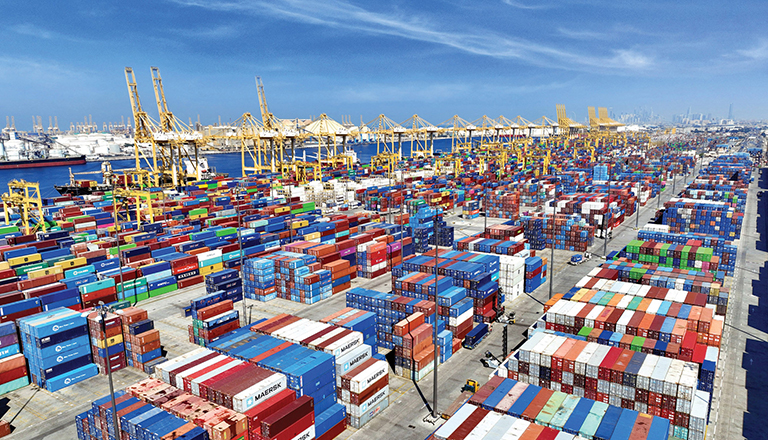
International shipping plays a vital role in supporting trade and business operations across the Gulf Cooperation Council (GCC). The UAE, Saudi Arabia, Oman, Qatar, Bahrain and Kuwait rely on efficient maritime transportation to receive essential commodities, industrial equipment, construction materials, food products and commercial goods.
However, disruptions and security risks around the Strait of Hormuz have created significant challenges for traditional shipping operations, encouraging shipping and logistics companies to explore alternative transportation routes to maintain cargo movement.
With changing shipping schedules and potential restrictions affecting conventional maritime corridors, businesses are increasingly considering alternative ports, cross-border road transportation and multimodal logistics solutions.
These developments are changing how cargo reaches the UAE and other GCC markets, highlighting the importance of flexible planning and choosing logistics partners capable of coordinating transportation efficiently.
Why Are Alternative Shipping Routes Becoming More Important?
The Strait of Hormuz is a strategically important maritime passage connecting the Arabian Gulf with international shipping networks. Disruptions and security risks affecting commercial vessel movements have created challenges for established shipping routes, making import and export planning more complicated for many businesses.
As a result, shipping companies and freight forwarders are exploring the possibility of redirecting certain shipments through alternative ports located outside the Strait of Hormuz. Cargo can then be transported by road, feeder vessels or other transportation methods to reach its destination.
However, not every shipment can be redirected to any alternative port. The most suitable route depends on the cargo’s origin, destination, type of goods, shipping line arrangements and the availability of transportation and customs clearance services.
This is where experienced freight forwarding companies play an important role in coordinating cargo movements between ports, borders and different markets.
1. Fujairah and Khor Fakkan: Important Maritime Gateways in the UAE
The UAE’s eastern coastline provides access to maritime ports located outside the Strait of Hormuz, making them important options when considering alternative shipping arrangements.
Fujairah Port is located on the Gulf of Oman and is one of the UAE’s strategically important ports. Its geographical position provides access to different cargo handling facilities and services, depending on operational availability.
Khor Fakkan Port, located on the eastern coast of Sharjah, is another significant gateway for international cargo. Shipments arriving through this port can be transported by road to Dubai, Sharjah, Abu Dhabi and other commercial and industrial destinations.
These ports can provide additional options for importers and exporters seeking alternative shipping arrangements.
However, the suitability of each port should be evaluated based on cargo type, container space availability, vessel schedules, terminal capacity, trucking availability and customs clearance requirements.
2. Oman’s Ports and Their Role in Supporting Regional Cargo Movement
Oman plays an important role in regional shipping route planning, supported by its extensive coastline and strategic access to international maritime trade routes.
Three ports are particularly relevant when considering alternative shipping arrangements:
- Sohar Port: An important commercial and industrial shipping hub that supports container handling and cargo distribution. Its road connections provide opportunities for transporting goods to the UAE and other GCC markets, subject to available transportation arrangements.
- Salalah Port: Located on the Arabian Sea, Salalah benefits from its strategic position along international maritime routes and serves as an important container transshipment hub.
- Duqm Port: Supports commercial, industrial and project cargo operations, contributing to the development of Oman’s wider logistics infrastructure.
Cargo arriving through these ports can be transported by road to various GCC destinations, depending on the port location, shipment requirements, transportation availability and border procedures.
It is important to understand that these ports are not interchangeable alternatives. Each has different operational capabilities and services, and the most suitable option should be selected according to the specific requirements of each shipment.
3. Saudi Arabia’s Role in Providing Alternative GCC Shipping Routes
Saudi Arabia also contributes to regional supply chain flexibility through its Red Sea ports and extensive road transportation infrastructure.
Ports such as Jeddah Islamic Port, King Abdullah Port and Yanbu provide important maritime gateways for international shipments.
Depending on the cargo destination and transportation arrangements, shipments arriving through these ports can be distributed within the Saudi market or transported by road to other GCC destinations.
This is particularly relevant for businesses importing goods into Saudi Arabia or distributing cargo across multiple Gulf markets.
However, cross-border road transportation requires proper documentation, customs coordination and compliance with applicable transit procedures and regulations in each country.
Transportation and customs requirements should therefore be evaluated before confirming the shipping route.
4. Road Freight: Connecting Alternative Ports to Final GCC Destinations
Road freight has become an essential link between maritime ports, warehouses, industrial facilities, commercial centers and final delivery destinations.
When cargo arrives at Fujairah, Khor Fakkan or Omani ports, trucking services can be arranged to transport shipments to customer locations, warehouses and distribution centers within the UAE or to other GCC markets.
Cross-border road transportation also supports cargo movement between the UAE, Oman, Saudi Arabia, Bahrain, Qatar and Kuwait, subject to approved routes, customs procedures and applicable transit requirements.
Road freight provides important flexibility for businesses transporting full containers, less than container loads, general cargo, industrial equipment and project shipments.
By combining sea and road transportation, businesses can benefit from multiple transportation options rather than depending entirely on a single maritime route.
5. Air Freight for Urgent and Time-Sensitive Shipments
While alternative sea and road routes provide suitable solutions for large-volume cargo, air freight remains an important option for urgent shipments.
Businesses transporting medical supplies, electronic components, machinery spare parts and high-value products may require faster delivery services to minimise operational delays.
Air freight can help reduce transit times when ocean shipping schedules become unpredictable or difficult to manage.
Although it generally involves higher costs than sea freight, it offers a practical solution for shipments where speed and reliability are essential priorities.
Combining air, ocean and road freight allows businesses to select suitable transportation arrangements based on cargo type, delivery schedules and available budgets.
6. The Importance of Multimodal Logistics and Warehousing
Changes in the shipping industry have increased the importance of multimodal logistics solutions.
Instead of relying on a single transportation method, businesses can combine ocean, road and air freight to develop more flexible shipping arrangements that meet the specific requirements of each shipment.
Warehousing and distribution services are equally important. Strategically managed storage facilities help businesses maintain inventory, organize shipments and distribute products according to market demand.
Efficient customs clearance, documentation management, shipment tracking and coordination between the different parties involved in transportation also help facilitate cargo movement across international borders.
With proper planning and logistics coordination, businesses can better manage changes in shipping schedules and transportation requirements.
How ACSS Helps Businesses Navigate Changing Shipping Routes
In an evolving logistics environment, choosing the right freight forwarding partner is essential for managing transportation and supply chain operations efficiently.
Arab Combined Shipping Services (ACSS), established in Dubai in 1998, provides a comprehensive range of international freight forwarding and logistics solutions to support businesses with their import and export requirements.
ACSS offers a variety of services, including:
- Ocean Freight: Full Container Load (FCL) and Less than Container Load (LCL) services for international cargo transportation.
- Road Freight: Domestic and cross-border transportation connecting the UAE with GCC countries and other international destinations.
- Air Freight: Transportation solutions for urgent, time-sensitive and high-value shipments.
- Warehousing: Storage and cargo handling solutions to support inventory management and distribution requirements.
- Customs Clearance: Coordination of the documentation and procedures required for customs clearance.
- Project Cargo: Transportation coordination for specialized shipments and oversized equipment requiring specific logistics arrangements.
With experience in international freight forwarding and logistics networks, ACSS supports businesses in evaluating suitable transportation options based on cargo requirements, destinations and delivery schedules.
Whether companies require full container transportation, less than container load shipments, cross-border road freight or integrated warehousing solutions, professional logistics coordination can help improve supply chain efficiency and manage operational challenges.
ACSS remains focused on providing practical and flexible transportation solutions that support customers across regional and international markets.
Conclusion
Alternative shipping routes are reshaping how cargo reaches the UAE and other GCC markets.
Ports in Fujairah, Khor Fakkan, Oman and Saudi Arabia, supported by road freight services and multimodal logistics solutions, provide additional options for businesses adapting to changes and disruptions in maritime transportation.
As international shipping conditions continue to evolve, businesses need to focus on flexible transportation planning, effective inventory management and partnerships with reliable freight forwarding providers.
Arab Combined Shipping Services (ACSS) continues to support businesses through comprehensive freight forwarding, transportation and logistics solutions designed to maintain efficient cargo movement across regional and international markets.
By selecting the right transportation strategy and ensuring professional logistics coordination, businesses can strengthen supply chain resilience and manage changing logistics requirements more effectively.
ACSS – Your Reliable Partner for Flexible Shipping and Transportation Solutions Across the GCC and International Markets.