
The logistics industry across the Gulf Cooperation Council (GCC) is undergoing significant changes as businesses adapt to evolving international trade conditions, shipping disruptions and increasing supply chain requirements. Countries such as the UAE, Saudi Arabia, Oman, Qatar, Bahrain and Kuwait rely on efficient transportation networks to move essential commodities, industrial equipment, construction materials and commercial products.
While ocean freight has traditionally played a major role in international cargo transportation, land freight is becoming increasingly important for regional trade and distribution. Challenges affecting major maritime routes, including the Strait of Hormuz, have highlighted the importance of having alternative transportation arrangements and flexible logistics solutions.
For businesses operating across the GCC and international markets, land freight offers flexibility, regional connectivity and greater control over cargo movement. It has therefore become an essential component of modern supply chain management.
1. Changing Shipping Conditions Across the GCC
The Strait of Hormuz is one of the world’s most strategically important maritime passages. Disruptions in this region can affect shipping schedules, vessel movements and cargo delivery arrangements.
When conventional maritime transportation faces uncertainty, businesses may need to consider alternative ways of moving their goods. Land freight provides an additional transportation option by connecting ports, warehouses, industrial zones and commercial destinations through established road networks.
For example, cargo arriving at ports in Oman or along the UAE’s eastern coastline may be transported by road to commercial destinations across the Gulf, subject to cargo requirements, customs clearance and applicable transit arrangements.
This flexibility allows businesses to diversify their transportation options and develop more adaptable supply chain strategies rather than relying entirely on individual maritime routes.
2. Strong Road Connectivity Between GCC Countries
One of the key advantages of land freight is the road network connecting markets across the GCC.
The UAE has important road transportation links with Oman and Saudi Arabia, while regional road corridors support the movement of goods towards Bahrain, Qatar and Kuwait.
These connections facilitate the transportation of various cargo categories, including:
- Industrial machinery and equipment
- Construction materials and building supplies
- Consumer goods and retail products
- Food and packaged commodities
- Automotive components and spare parts
- Commercial and general cargo
For businesses involved in regional trade and distribution, road transportation provides a practical way to move shipments between neighbouring countries, subject to border procedures, customs regulations and the requirements of each destination.
3. Greater Flexibility in Cargo Movement
Land freight offers businesses greater flexibility when planning regional shipments. Unlike transportation arrangements that depend entirely on vessel schedules, road freight can provide direct connections between cargo collection points and final delivery destinations.
Transportation can be arranged according to cargo availability, delivery priorities and customer requirements.
For instance, cargo arriving at Sohar Port in Oman can be transported by road towards the UAE, subject to border clearance, transit requirements and suitable transportation arrangements.
Similarly, goods arriving through Fujairah or Khor Fakkan can be transported to warehouses, factories and commercial facilities across the UAE.
This flexibility is particularly valuable for businesses managing changing shipment schedules, urgent requirements and time-sensitive deliveries.
4. Cost Management and Transportation Efficiency
Managing logistics expenses is a priority for importers and exporters. Shipping disruptions can introduce additional costs through longer transit routes, port handling, container storage and unexpected delays.
Land freight provides another option for businesses evaluating their overall transportation expenses.
For shorter regional distances and selected cargo categories, road transportation may offer a practical balance between cost and delivery time. It can also reduce the need for multiple handling arrangements when a suitable direct road connection is available.
However, the overall transportation cost depends on several factors, including cargo weight and dimensions, distance, fuel prices, border charges, customs procedures and vehicle availability.
Working with an experienced freight forwarding company helps businesses compare available transportation options and identify suitable arrangements based on their shipment requirements and budget.
5. Supporting Warehousing and Regional Distribution
Land freight plays an important role in connecting ports with warehouses, manufacturing facilities, distribution centres and retail locations.
Businesses operating across multiple GCC markets often require regular inventory movement between storage facilities and final destinations.
Efficient trucking arrangements support various logistics activities, including:
- Moving imported cargo from ports to warehouses
- Distributing products to regional markets
- Transporting industrial supplies to project sites
- Replenishing retail and commercial inventory
- Moving equipment between business locations
When combined with professional warehousing and distribution services, land freight helps create a more coordinated supply chain.
It also allows businesses to position inventory closer to their customers, potentially improving delivery planning and distribution efficiency.
6. The Growing Importance of Cross-Border Logistics
Cross-border transportation is a major part of regional trade. Businesses regularly move products between the UAE, Oman, Saudi Arabia, Bahrain, Qatar and Kuwait to meet commercial and industrial requirements.
However, international road transportation involves more than simply arranging a truck. Companies must consider customs documentation, border regulations, transit permissions, cargo declarations and applicable import requirements.
Incomplete documentation or inadequate planning can result in unnecessary delays at border checkpoints.
Experienced freight forwarders help coordinate these requirements by working with transportation partners, customs representatives and other logistics service providers.
This coordination is particularly important for businesses handling regular cross-border shipments, large commercial consignments or time-sensitive deliveries.
7. Land Freight as Part of Multimodal Logistics
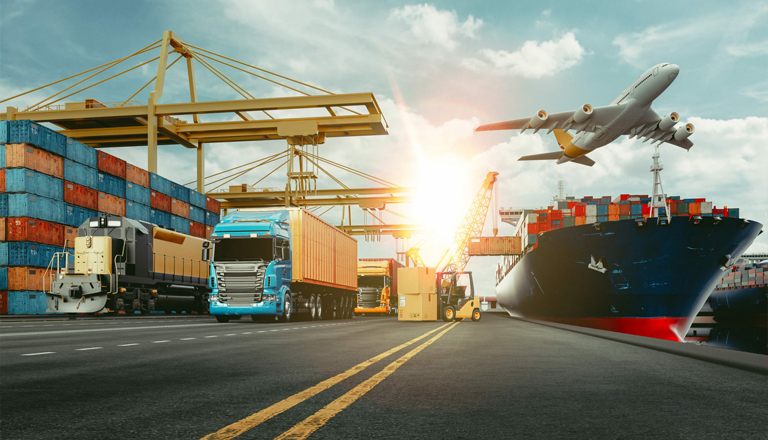
Land freight does not replace ocean or air transportation. Instead, it complements these services as part of integrated logistics strategies.
Multimodal transportation combines different modes of transport to move cargo efficiently from its origin to its final destination.
For example, imported goods may travel by sea to a regional port before continuing their journey by road to an inland destination. Similarly, urgent consignments may arrive by air and then be distributed through local or regional trucking networks.
Land freight is also important in international shipping arrangements, connecting regional ports with inland destinations through coordinated road transportation.
This combination gives businesses more transportation choices and helps them respond to changing shipping conditions, route disruptions and operational challenges.
How ACSS Supports Land Freight and GCC Logistics
Choosing a reliable logistics partner is essential for managing transportation requirements across the GCC and international markets.
Arab Combined Shipping Services (ACSS), a Dubai-based logistics provider established in 1998, offers comprehensive freight forwarding and supply chain solutions for businesses involved in regional and international trade.
ACSS provides a range of services, including:
- Road freight within the UAE, across the GCC and to international destinations
- Ocean freight, including Full Container Load (FCL) and Less than Container Load (LCL)
- Air freight for different cargo requirements
- Warehousing and cargo storage
- Customs clearance coordination
- Project cargo and specialised transportation arrangements
Through coordinated transportation arrangements and international logistics networks, ACSS helps businesses manage cargo movement according to their operational requirements.
Whether a company requires cross-border road transportation, port-to-warehouse delivery, regional distribution or integrated international freight forwarding, ACSS works to provide suitable logistics solutions that support efficient cargo movement.
With experience in freight forwarding and transportation coordination, ACSS supports businesses in navigating changing logistics requirements across the UAE, the wider GCC and international markets.
Conclusion
Land freight is becoming increasingly important for GCC logistics due to changing shipping conditions, stronger regional trade connections and the growing need for flexible transportation solutions.
Its ability to connect ports, warehouses, industrial facilities and commercial destinations makes it an essential part of regional supply chain management.
As businesses continue to adapt to evolving international trade conditions, combining land freight with ocean and air transportation can provide greater flexibility and help strengthen supply chain resilience.
With comprehensive freight forwarding and transportation services, Arab Combined Shipping Services (ACSS) supports businesses seeking dependable logistics solutions across the UAE, the GCC and international markets.
ACSS – Your Reliable Partner for Road Freight, Freight Forwarding and Integrated Logistics Solutions.